MCLZ8 Fun with the NABU

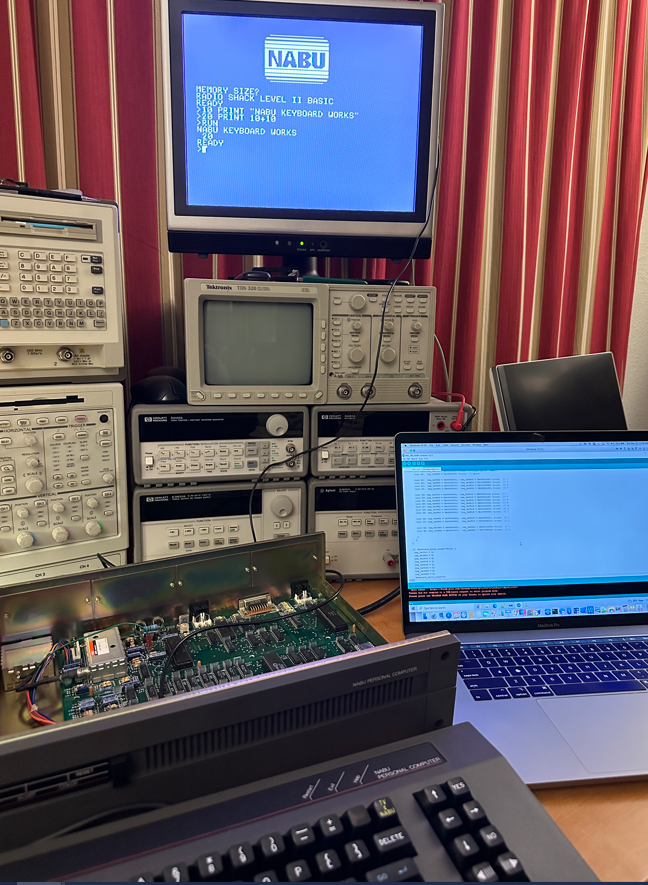
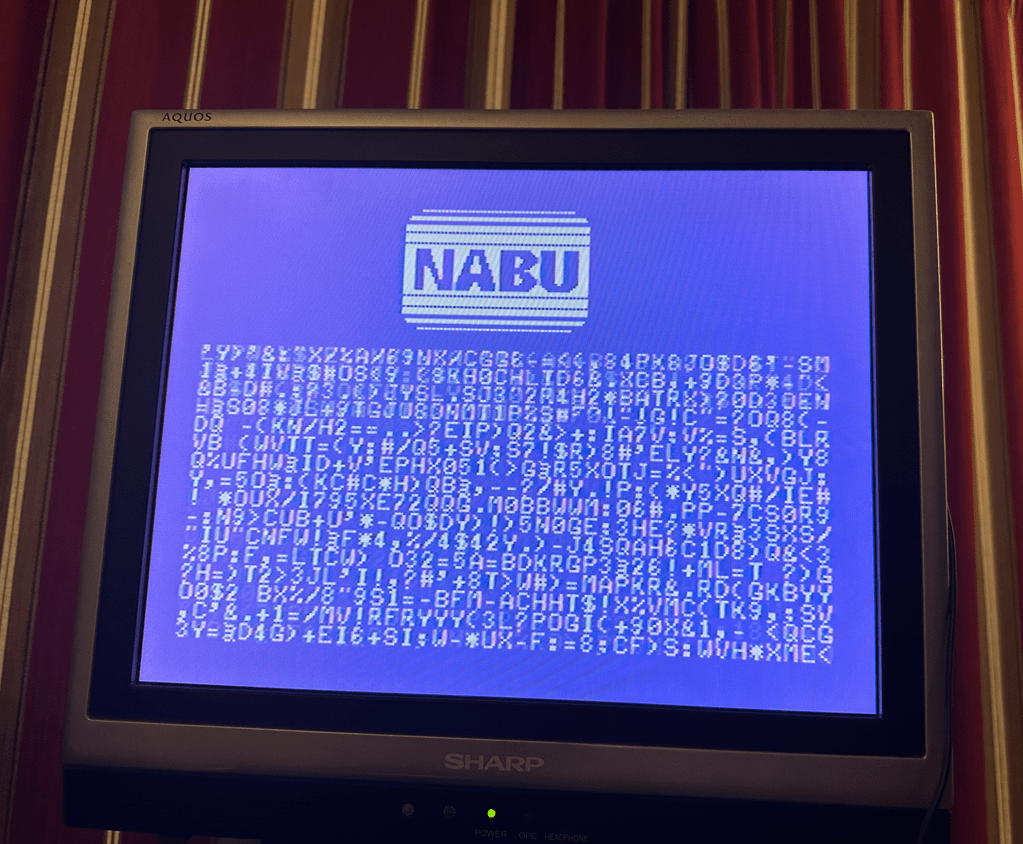
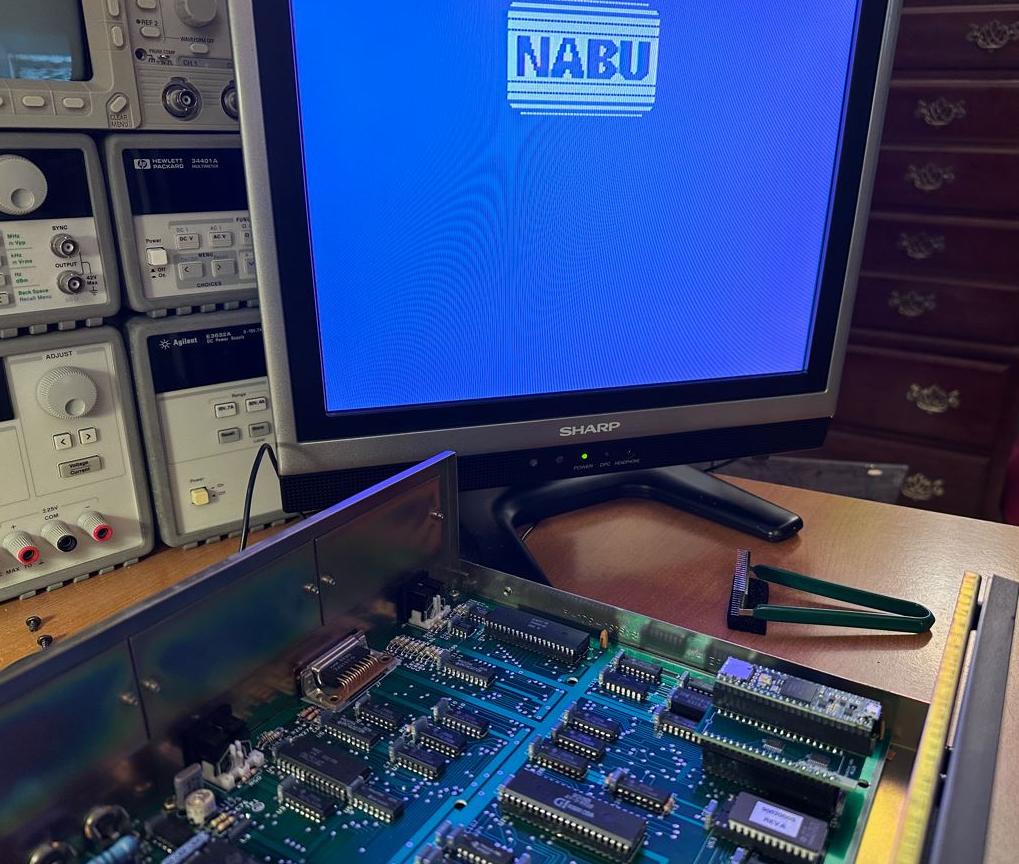
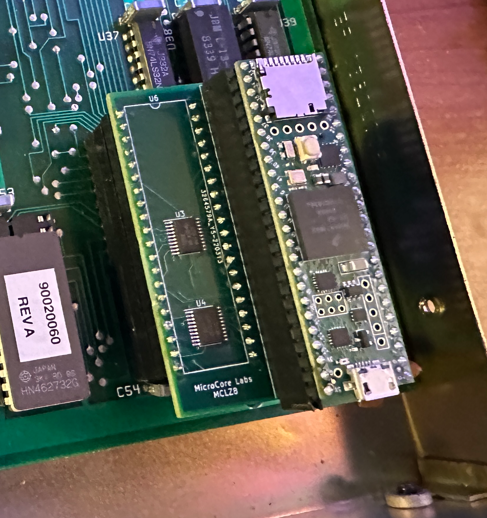
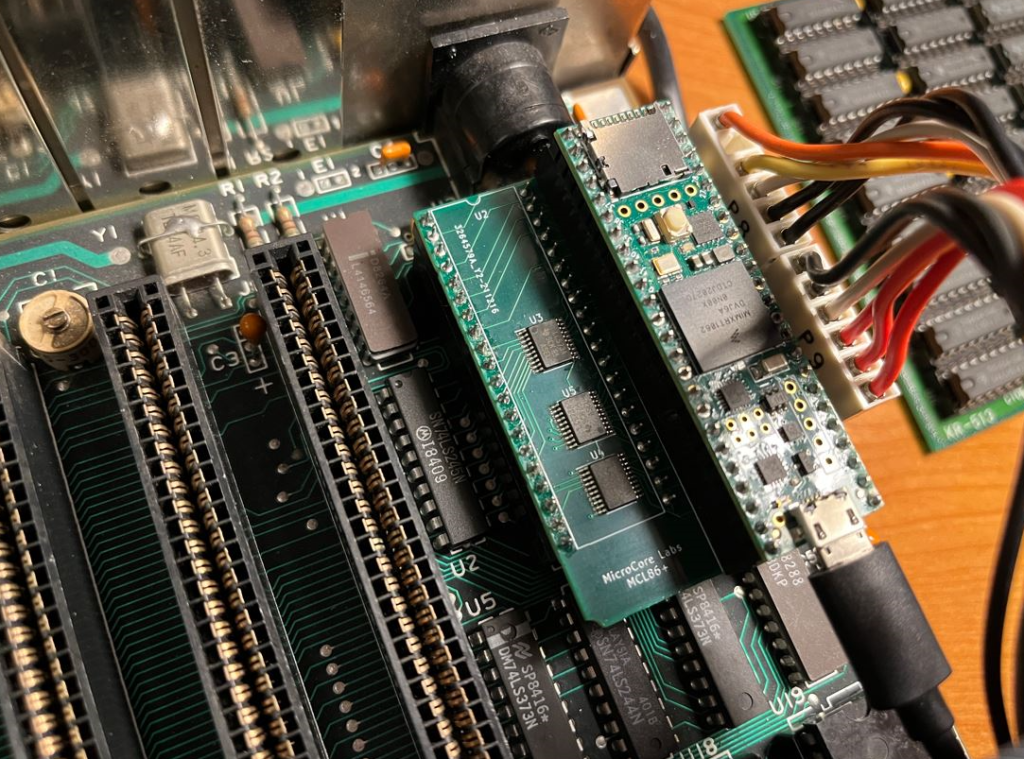
Received my NABU today, and after some initial checks I tried replacing the Z80 with my MCLZ8. Seems to work fine – and fits in the machine perfectly!

Some ideas about what to do next:
– The MCLZ8 emulates the Z80 but can also emulate the BIOS ROM so I could try a number of the old and new ones out there.
– It might be simple to intercept and swap address ranges to run MSX cartridge ROMs on the NABU. 
– Can create some drivers for the video, sound, and keyboard to allow C code to be run the NABU using the 800 Mhz Teensy 4.1. Sort of like a “NABU Shield” for the Teensy.

MCLZ8 Fun with the NABU

Osborne 1 Debug with MCLZ8

I recently purchased an Osborne 1 computer which was not able to boot but was in very good cosmetic condition so I thought it would be a good opportunity to try the my MCLZ8 on another vintage Z80 machine.

When the computer is turned on it made a continuous beeping sound, the disk drive was running non-stop, and there was random data on the screen. The first step was to open the machine and test the voltages which were all within specifications. Actually, the first-first step was to put some tape over the speaker as this beep was very loud and annoying! 🙂

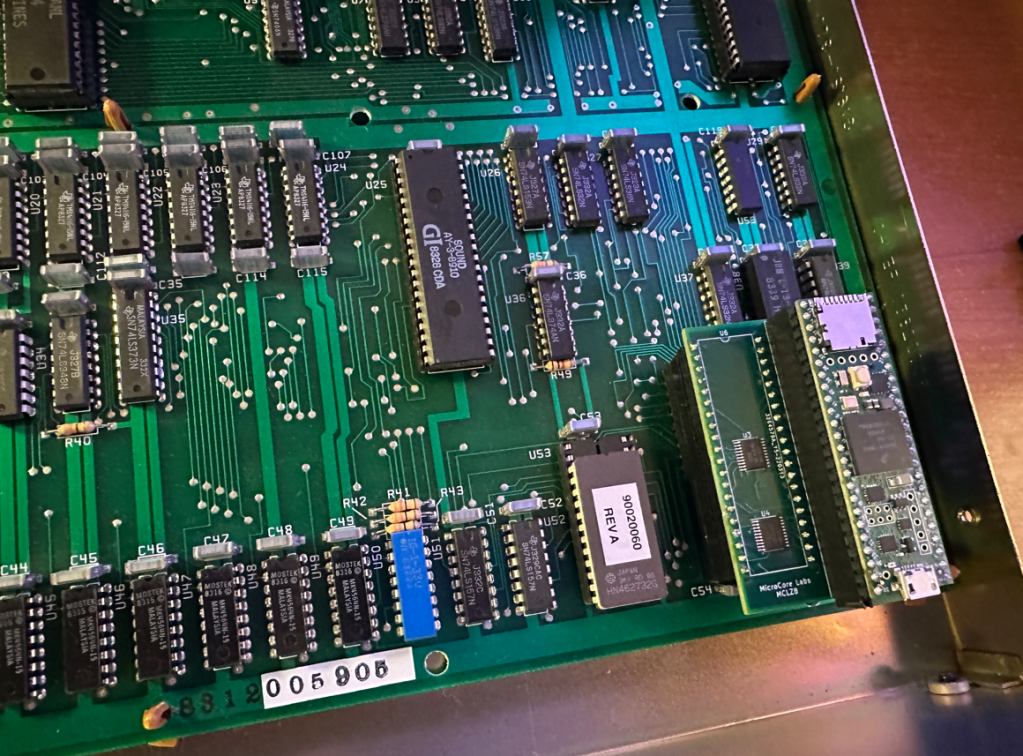
Next I removed the Z80 and installed the MCLZ8 to test DRAM for any issues. I added a few lines of code to the MCLZ8 after RESET was de-asserted to write and read from the 64KB of DRAM using BIU reads and writes. I found that the first three DRAM banks were ok and that there was a stuck bit on bit[5] of the fourth bank. Here is a pic of the socketed and replaced it with a spare DRAM from my Apple II+. You can even see the Apple logo on the chip!

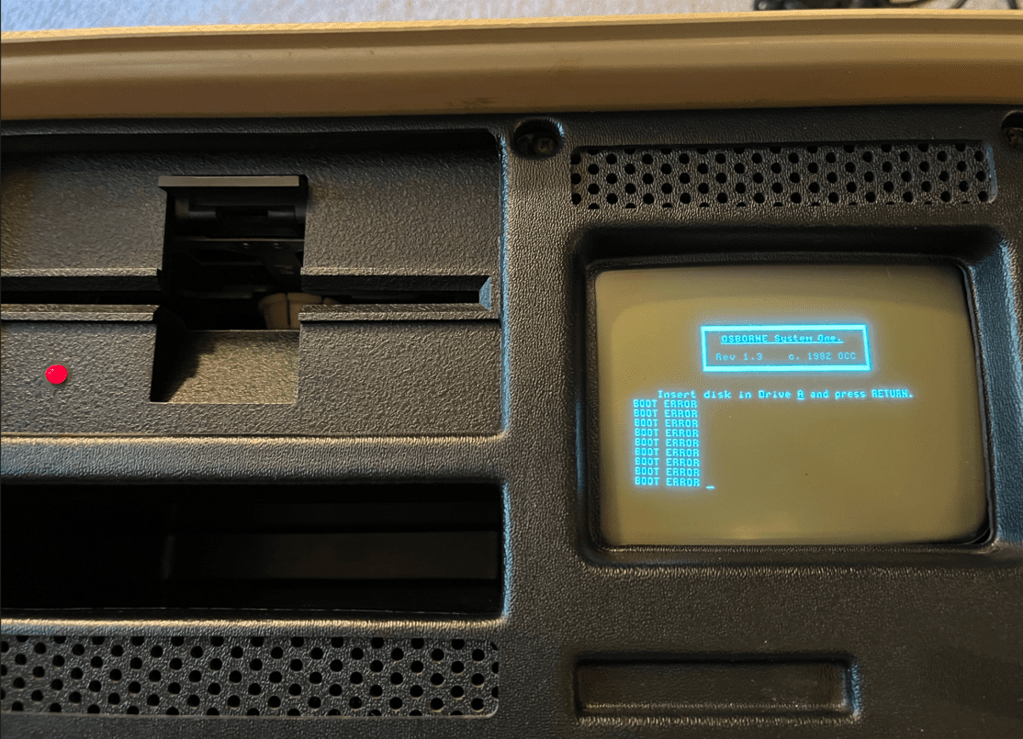
After that the machine was able to print to the screen! This banner was, however, flashing continuously and it took me a while to understand that it was because there was a stuck key(s) on the keyboard. When the keyboard was unplugged the flashing went away.

I used a trick I found on the web to simulate an Enter-key keypress by shorting keyboard connector pins 3 and 15 momentarily. When this was done it went into a loop reporting BOOT ERROR. Light criticism, but would have more accurate to say there was no disk present…

At this point I believe the machine is ready to boot from diskette, but I don’t own any to test with!

It appears that the only issue with the computer is the stuck keyboard, so I will probably leave that to the next enthusiast to debug and solve!

The construction is a bit flimsy but it is an otherwise attractive machine. I like it!

And I am also happy that I was able to use my MCLZ8 to quickly isolate the faulty DRAM out of the 32 possibilities.

Osborne 1 Debug with MCLZ8

MCL86+ 8088 Accelerator Update

I updated the MCL86+ code with a new acceleration mode which mirrors 256KB of the IBM XT’s motherboard RAM and ROM using the Teensy 4.1 internal memory and disabling the 8088 cycle accuracy.

One obstacle was that the IBM PC uses DMA for disk accesses which results in the contents of motherboard DRAM being different than the contents on any mirrored memory inside of the MCL86+ emulator. The fix for this is to copy the physical memory over to the mirrored memory just before the acceleration is enabled. It also requires that, once this acceleration is enabled, one should use a virtual C disk so that DMA is not used. Using an XT-IDE would also probably work since it does not use DMA.

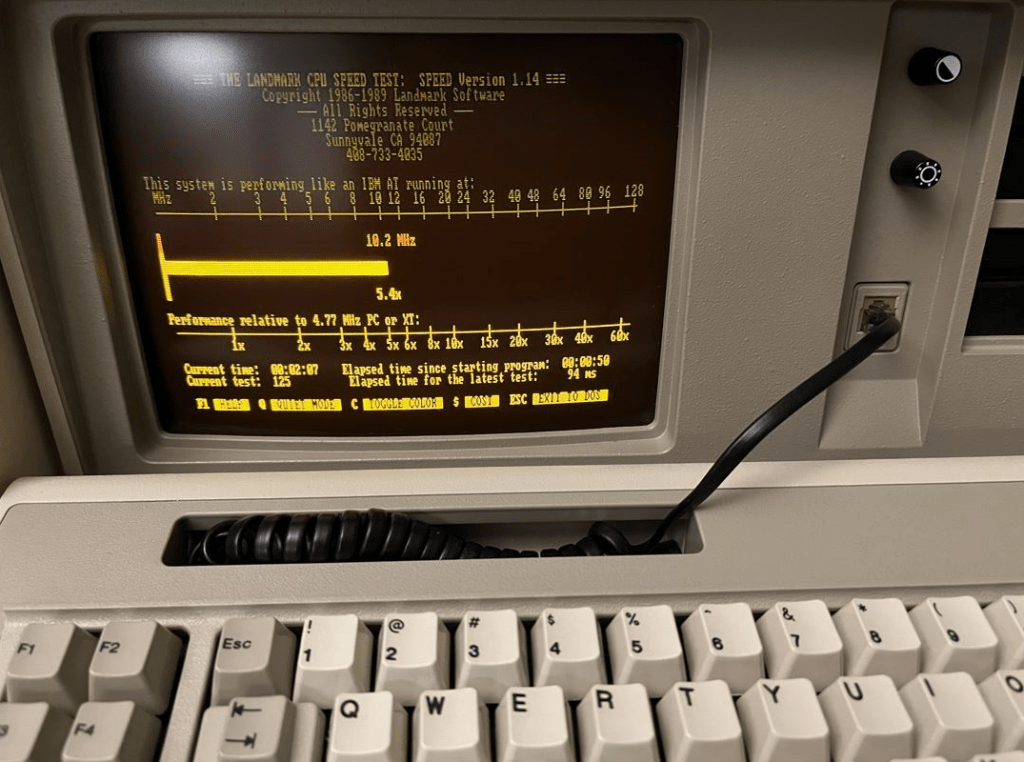
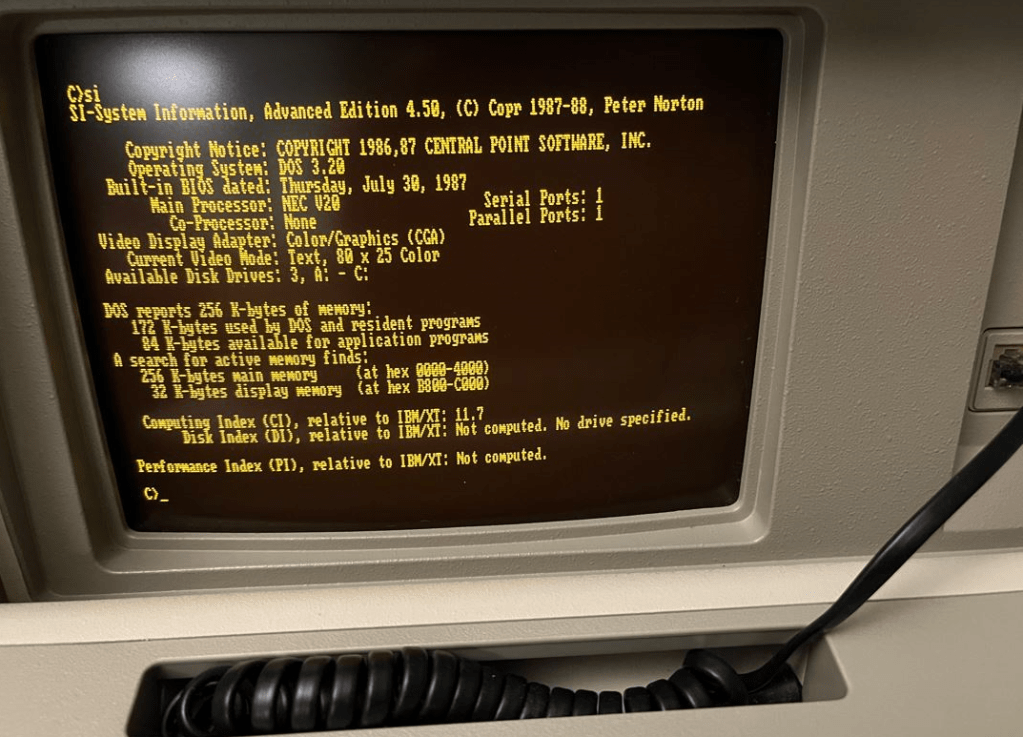
The results is a substantial performance increase! Some tools report that the IBM XT runs at speeds close to an 80386. Not bad for an inexpensive drop-in 8088 replacement processor – and outperforms the V20 by a wide margin!

MCL86+ 8088 Accelerator Update

TRS-80 Model I emulator uses MCLZ8 in a Teensy

I integrated the TRS-80 Model I ROMs into my MCLZ8 Z80 emulator and mapped the UART to the TRS-80’s keyboard and video RAM and now have it running on a standalone Teensy 4.1 board!

I am taking advantage of the high-speed USB UART to display the TRS-80 video RAM contents to the user. Whenever something is written to the video RAM, I simply output the complete 64×16 screen contents to the UART! It goes so fast that it looks like smooth motion – similar to flip-book animation.

In theory, it would be easy to map any memory or IO address to the Teensy’s GPIOs so one could write a BASIC program to control some pins on the board and could even implement a parallel bus… I am using the TRS-80 Model I ROMs at the moment. Probably no reason the Model III ROMs wouldn’t work just as well.

One other neat feature is that you can cut and paste a BASIC program into the UART window so you don’t need to type them in! 🙂

Source code is on GitHub: https://github.com/MicroCoreLabs/Projects/tree/master/MCLZ8/Code

TRS-80 Model I emulator uses MCLZ8 in a Teensy

MCLZ8 Videos – Games and Z80 Acceleration

I posted some videos to YouTube of a few games and also a small BASIC program to demonstrate the acceleration achieved when running the MCLZ8 is the maximum acceleration mode.

When using acceleration mode-3 which operates both RAM and ROM entirely inside of the Teensy and is accessed at 800Mhz, the total CPU speedup appears to be between 15x and 20x over the stock Z80! This is with “number crunching” only and not performing any video accesses which would slow down the CPU due to the video memory being located on the motherboard.

Video of Donkey Kong under NewDOS: https://www.youtubecom/watch?v=AHEyADtfJ3U

Video of Zaxxon under NewDOS: https://www.youtube.com/watch?v=NqiwF3rjT58

Video of Acceleration Demonstration under TRSDOS: https://www.youtube.com/watch?v=0iaphw76k6Q

I should have described the acceleration modes are in the videos, so ill correct that here:

Mode 0 – All external memory accesses
Mode 1 – Reads and writes are cycle accurate using internal memory with writes passing through to motherboard
Mode 2 – Reads accelerated using internal memory and writes are cycle accurate and pass through to motherboard
Mode 3 – All read and write accesses use accelerated internal memory

MCLZ8 Videos – Games and Z80 Acceleration

MCLZ8 – Testing Various Applications

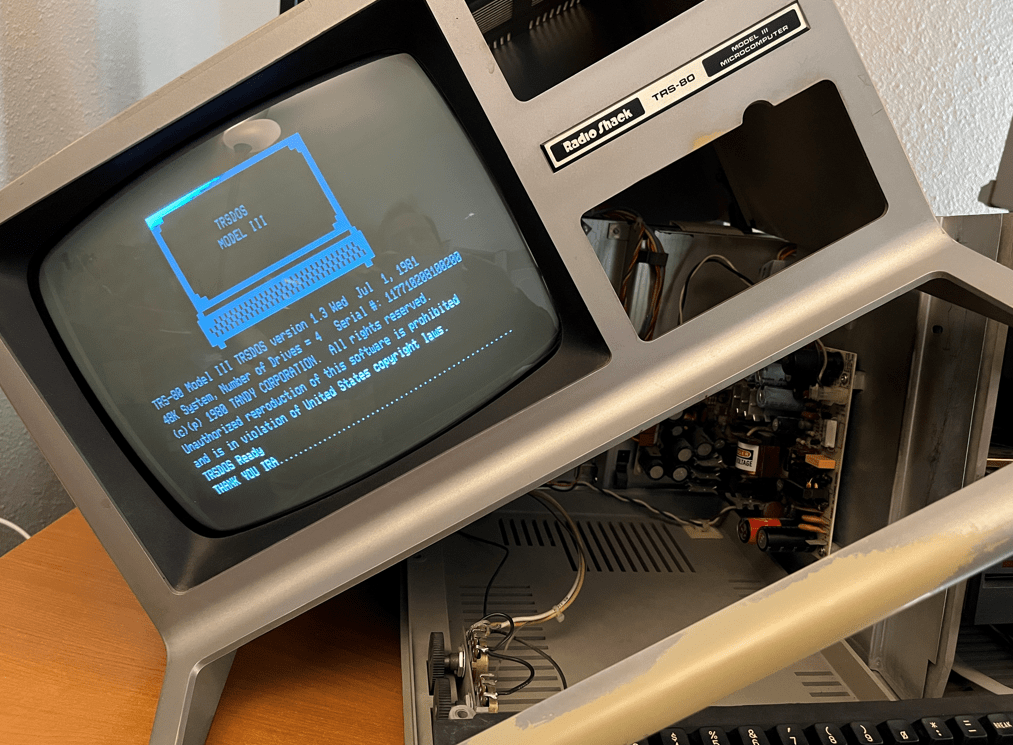
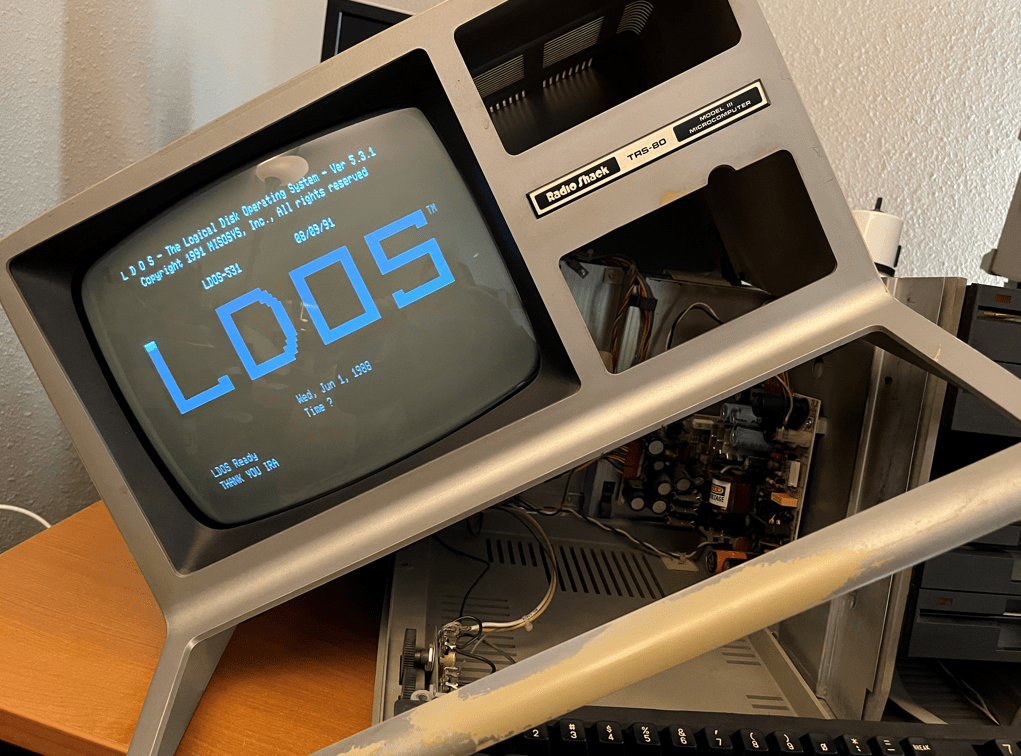
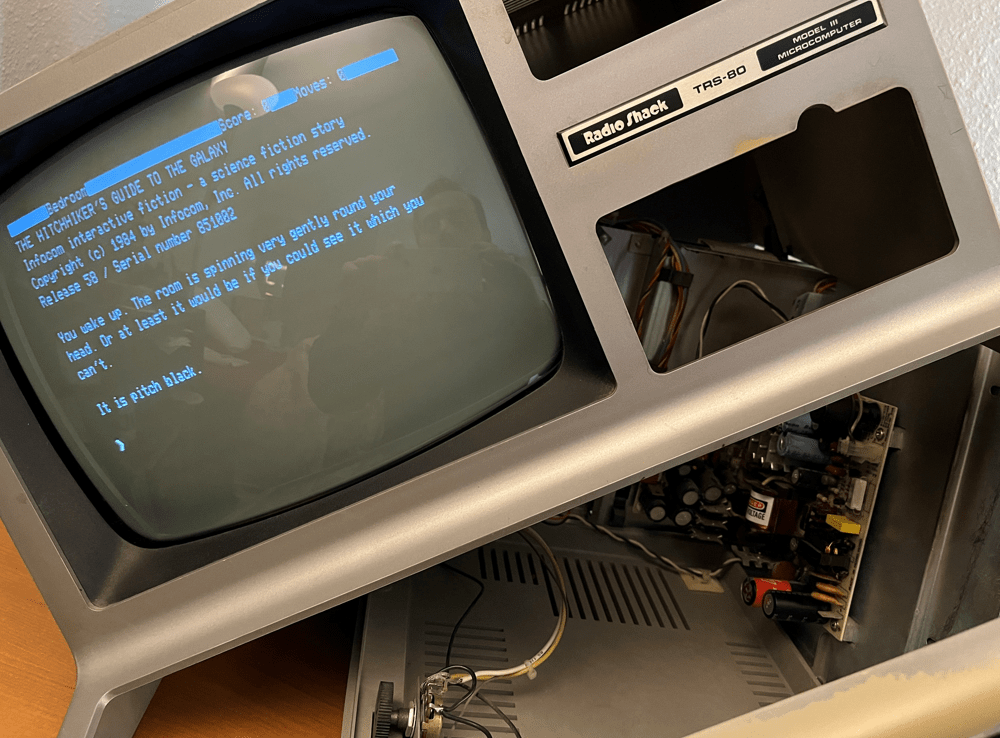
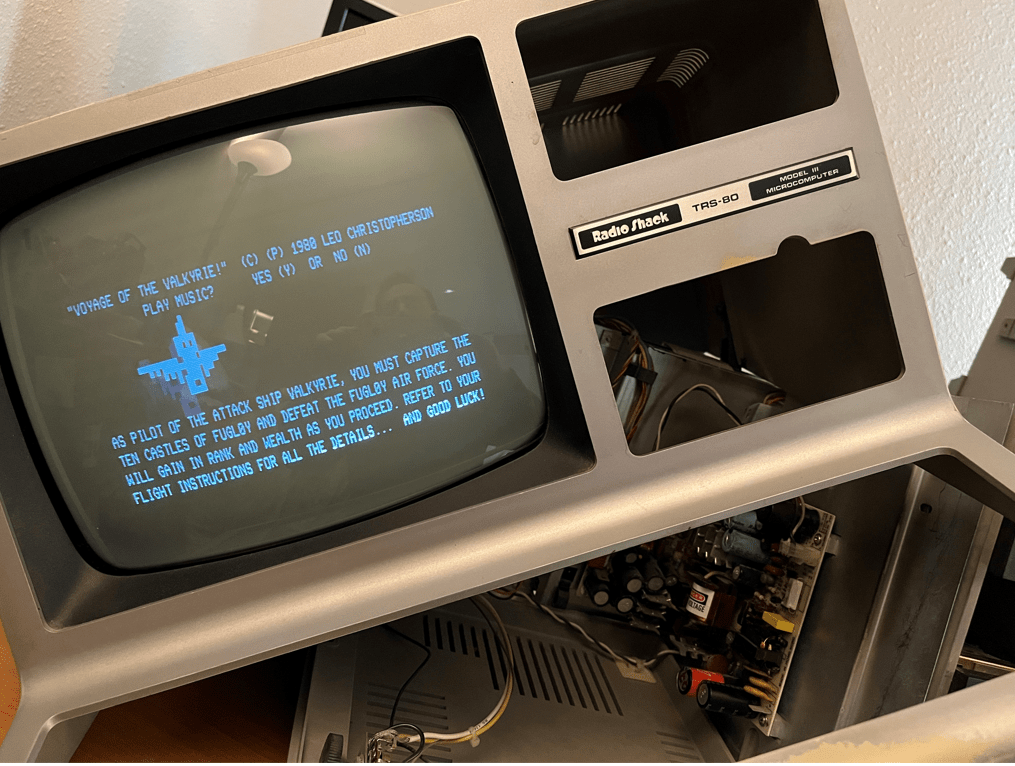
My friend Ira Goldklang at http://www.trs-80.com sent me a number diskettes chock-full of applications to try on my MCLZ8 powered TRS-80 Model III. I’m happy to report that the testing was very successful! All of the DOS’s booted and allowed other diskette applications to be launched, all of the games that I tried seemed to fun fine, and some diagnostic programs reported happy results!

I plan to take a few videos soon, and one them will be of a diagnostic running with max acceleration which is rather amusing! So here are a few pictures of the progress so far and I will post more to this webpage as I try new applications and games

MCLZ8 – Testing Various Applications

MCLZ8 – Zilog Z80 Emulator in TRS-80 Model III

Update: Preliminary results indicate that the MCLZ8 is more than 15 times faster than the stock Z80 in the TRS-80 Model III. Stay tuned…

My latest project, the MCLZ8, is a Zilog Z80 emulator which can be used as a drop-in replacement for the original Z80. It uses a Teensy 4.1 microcontroller board which contains an 800Mhz microcontroller and a small PCB to perform the voltage translation between the motherboard and the microcontroller. The MCLZ8’s Z80 emulation passes the exhaustive ZEXALL opcode test suite and the speedy microcontroller allows the ability to simultaneously mimic the Z80’s local bus interface.

The MCLZ8 seems to work quite well as a Z80 replacement in a TRS-80 Model III where it runs BASIC and is able to boot from the diskette drive. I have tried NEWDOS and a number of games and I will test more applications in the near future.

Of course the next step will be to see how much acceleration we can achieve! 🙂 If we eliminate cycle-accuracy, locate the RAM and ROM into the MCLZ8’s internal RAM and access them at the top speed of the microcontroller we should get some very interesting results! There have been a number of TRS-80 accelerators over its history, so it will be interesting to see where the MCLZ8 ranks!

But for now I am happy to see the MCLZ8 working inside of this legendary computer!

MCLZ8 – Zilog Z80 Emulator in TRS-80 Model III

Zilog Z80 Emulator – MCLZ8

I am beginning work on a Zilog Z80 emulator which runs on an Teensy 4.1 that can be used as a drop-in replacement for the original Z80. I recently bought a TRS-80 Model III to test this with…

The first step is to figure out which Z80 IO’s will map to the Teensy 4.1 and also any buffers that are needed to translate between 3.3V and 5V. I found that four buffers will do the trick with one of them being used to latch the lower eight Z80 address signals.

Many of the IOs will be the same as the MCL86+ which is my 8088 emulator, which will save a lot of time!

The board is now being built, so I have time to write the actual Z80 emulator code. I will start with the bus interface and then expand to support the multiple levels of opcode decode and then the actual opcodes themselves!

Zilog Z80 Emulator – MCLZ8